Where the names came from.
Two of the names in this app, Catchlight and Obie, come from old film-lighting craft. I went looking for where they started, and found a small, tender story I didn't expect.
What a catchlight is
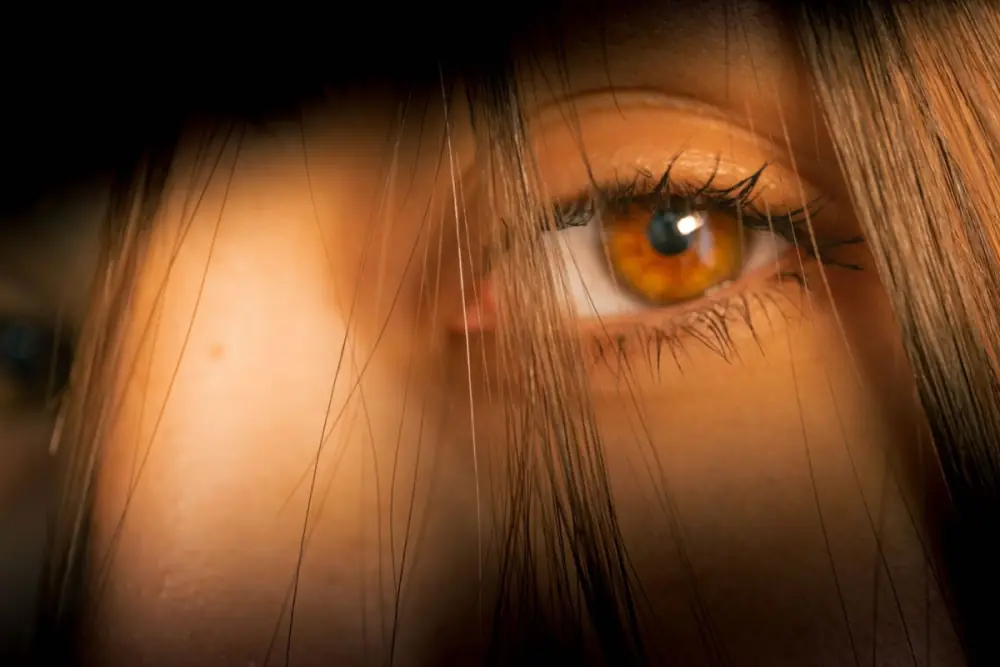
Look closely at a good portrait, or a still from an old film, and you'll notice a tiny bright point in each eye. That's the catchlight. It's just the reflection of a light source, caught in the wet curve of the eye, and it does an enormous amount of work for something so small.
Take it away and a face falls flat. Cinematographers have a blunt way of putting it, without that little glint, they say, a face can look dull, lifeless, even dead. Put it back and the same face is suddenly alive, and your eye goes straight to it. A spark in the eye is the difference between a person looking out at you and a mask.
The light they named after her
Obie is a nickname for a light. It earned that name due to the real person behind the story. In 1944 a cinematographer, Lucien Ballard, was shooting the film "The Lodger". Its star was Merle Oberon, though her real name was Estelle Merle O'Brien Thompson. Either way, it's where "Obie" comes from, said to be her nickname on set. The couple fell in love on that set and married a year later.
As the story goes, Oberon had been in a bad car crash seven years before, in London in 1937, and it left some small scars on her face. Ballard built her a light. A small, soft source, mounted right up by the camera lens, angled to wash gently over her face and quiet the marks down. The crew started calling it the Obie, after her, and the name stuck. It stuck so well that, the better part of a century on, cinematographers still call any little light by the lens an Obie, most of them with no idea there was ever a woman called Oberon.
I'll be straight that the tender version of this, a man building a light to make the woman he loved look her best, is more legend than documented fact. The people who know the craft tell it with a wink, "as cinema legend has it". The crash was real. Whether the scars were ever bad enough to need hiding, nobody can quite agree. I've decided I don't mind. Some stories are true in the way that matters, even when the details have gone soft.
Why they both ended up here
Here's the part that made me want both names. Because Ballard's little light sat so close to the lens, it did something he may never have planned. It put a catchlight in her eyes. Every time. The soft fill that smoothed her face also lit the spark that made her look alive. The Obie and the catchlight turned out to be the same gesture, seen from two sides. One is the light you add. The other is the life it brings.
That's why they're here. A Take you lift to the top, the single most important thing right now, is your Obie. It's the one you point the light at. And the whole app is named for the catchlight, the small bright thing that makes the rest feel alive. A pile of notes you never look at is a vacant stare. The idea was always to put a little light back on them, so your own thoughts look out at you again.
None of this is on the screen, of course. A catchlight is invisible when it works. That felt like the right thing to name an app after.
Join the list and we'll tell you the day Catchlight is ready, with extra time on the free trial.
Early joiners get 30 days free, instead of 14, when we launch, and that's all we'll email you about.